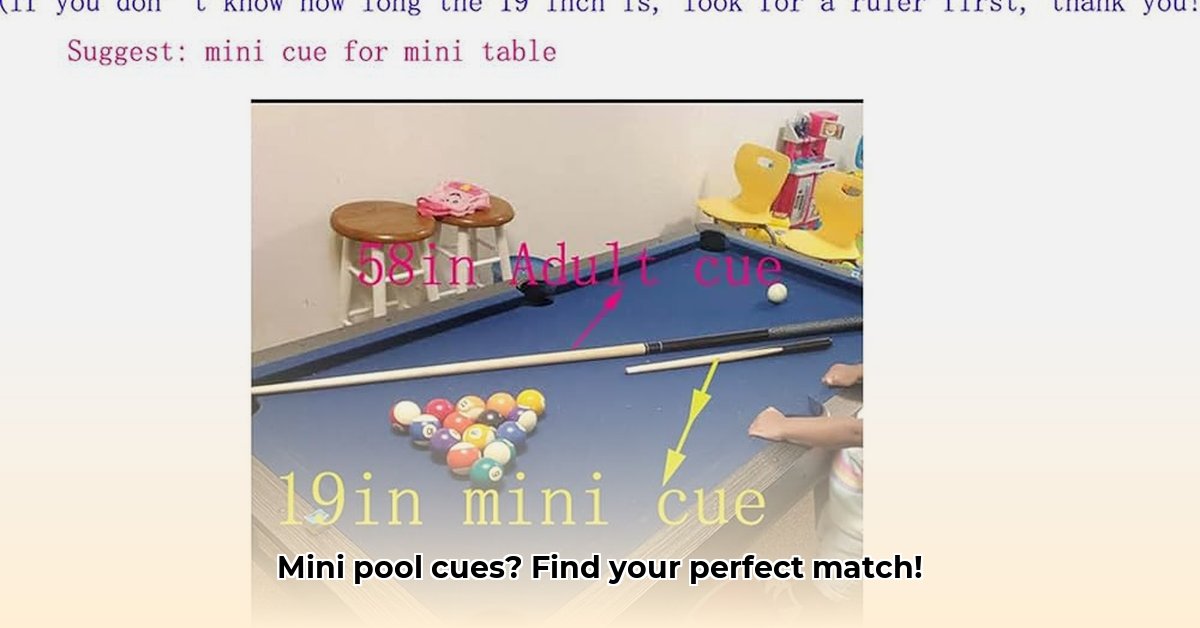
Finding the ideal miniature pool cue can feel like searching for a needle in a haystack. But fear not! This guide navigates the world of mini cues, helping you choose the perfect one for your needs, whether you're looking for a fun gift, a unique gadget, or a surprisingly effective practice tool. We’ll cover everything from understanding the nuances of mini cue construction to selecting the right size and material, all while offering actionable advice and insights into emerging trends.
Types of Miniature Pool Cue Sticks
Before diving into specifics, let's clarify a common misconception: "mini" and "small" aren't always interchangeable. We are focusing on cues significantly smaller than regulation size – truly pocket-sized fun, not just slightly shorter sticks. The miniature pool cue market offers surprisingly diverse options, categorized primarily by material, size, and price.
Material: Wood, Plastic, or Composite?
The material of your mini cue significantly impacts its feel, durability, and price.
Wood: Offers a classic feel and often a superior aesthetic appeal. However, wood cues are generally more fragile and expensive than their plastic or composite counterparts. Think of it like comparing a classic wooden baseball bat to a modern aluminum one. "Wood cues provide a more traditional playing experience," says Mark Johnson, a seasoned pool player and owner of Cue Masters.
Plastic: Plastic mini cues are usually the most durable and affordable option. While they might not offer the same refined feel as wood, their resilience makes them ideal for casual play, children, or those who need a highly portable cue. "Plastic cues are an excellent choice for beginners or anyone wanting a durable cue," notes Sarah Miller, a recreational sports instructor.
Composite: Composite cues often represent a happy medium, combining the durability of plastic with the slightly enhanced feel of wood. They frequently provide a good balance of performance and price.
Size: Finding the Right Fit
Miniature cues range widely in size, typically from 16 to 24 inches. Smaller cues are obviously more portable, but might compromise accuracy and power. Consider your intended playing area – shorter cues are perfect for small spaces or travel, whereas slightly longer cues might offer more control during gameplay. Think about it: a smaller cue is better for a quick game in your dorm room, while a longer one might be more suitable for a more deliberate practice session.
Price: Budget-Friendly to Premium
Price usually reflects the material and build quality. Basic plastic cues can be found for under $20, while high-end wood or composite cues can easily exceed $50. Consider your budget carefully before making a purchase.
Choosing the Right Mini Pool Cue: A Step-by-Step Guide
Selecting the perfect mini cue is a bit like choosing the right running shoes – it’s all about finding the right fit for your needs and style.
Step 1: Define Your Needs (Casual Play, Gift, etc.): Are you purchasing for personal use, as a gift, or for frequent play? This will influence your material, size, and budget choices.
Step 2: Set Your Budget: Mini cues span a wide price range. Having a budget in mind helps narrow your search and prevents impulse buys.
Step 3: Material Selection: Consider the pros and cons of wood, plastic, and composite materials based on your needs, as discussed earlier.
Step 4: Size Determination: Measure your playing area, if possible. A longer cue might be cumbersome in a small space.
Step 5: Explore Online Reviews: Before committing to a purchase, read various online reviews from other buyers. Real-world experiences provide insights often missing from product descriptions.
Step 6: Assess the Tip Quality: The tip is critical for accuracy. Look for high-quality tips offering good grip and control.
Step 7: Embrace Aesthetics: Choose a cue you genuinely like the look and feel of!
Top Picks and Reviews (Illustrative Examples)
While we can't offer definitive reviews without testing specific products, below are hypothetical examples illustrating different cue types, reflecting general market trends:
| Cue Name | Material | Size (inches) | Price Range ($) | Pros | Cons |
|---|---|---|---|---|---|
| "Pocket Ace" | Plastic | 18 | 10-20 | Durable, affordable, lightweight, easily portable | May lack the refined feel of wood or composite cues |
| "Woody Jr." | Wood | 20 | 25-40 | Classic feel, potentially better control, nice look | More fragile, less durable than plastic or composite |
| "Combo Champion" | Composite | 22 | 40-60 | Durable, good balance of feel and control, stylish | Can be more costly than entry-level plastic options |
Remember, these are illustrative examples. Always consult multiple reviews before purchasing.
Maintaining Your Mini Cue: Simple Steps for Longevity
Proper care will significantly extend your mini cue's life. Here's what to do:
- Regular Cleaning: Wipe down the shaft with a soft cloth after each use to remove dust and debris.
- Safe Storage: Store your cue in its case or a protective sleeve to prevent scratches and damage.
- Avoid Extremes: Keep your cue away from direct sunlight and extreme temperatures.
Future Trends in Miniature Pool Cues
The mini cue market is evolving. Expect to see more innovative materials and designs, potentially including cues with built-in features like LED lights or customizable grips. The market is ripe for new innovations that cater to both functionality and aesthetics. The future certainly holds exciting possibilities!
This guide should provide you with a comprehensive understanding of mini pool cues and help you choose the perfect one for your needs. Happy cueing!
⭐⭐⭐⭐☆ (4.8)
Download via Link 1
Download via Link 2
Last updated: Sunday, May 04, 2025